
Vehicle & platform integration

Medical capability, designed into the vehicle.

Ambulances and protected-mobility medical vehicles need connected clinical equipment that fits an existing platform without compromising its care and transport role. AEGISCOP works with vehicle manufacturers and integrators on how a LifeBot configuration is installed, powered and connected.

  • Ambulance manufacturers and converters
  • Armoured and protected-mobility vehicle makers
  • Systems integrators
  • Medical evacuation programmes
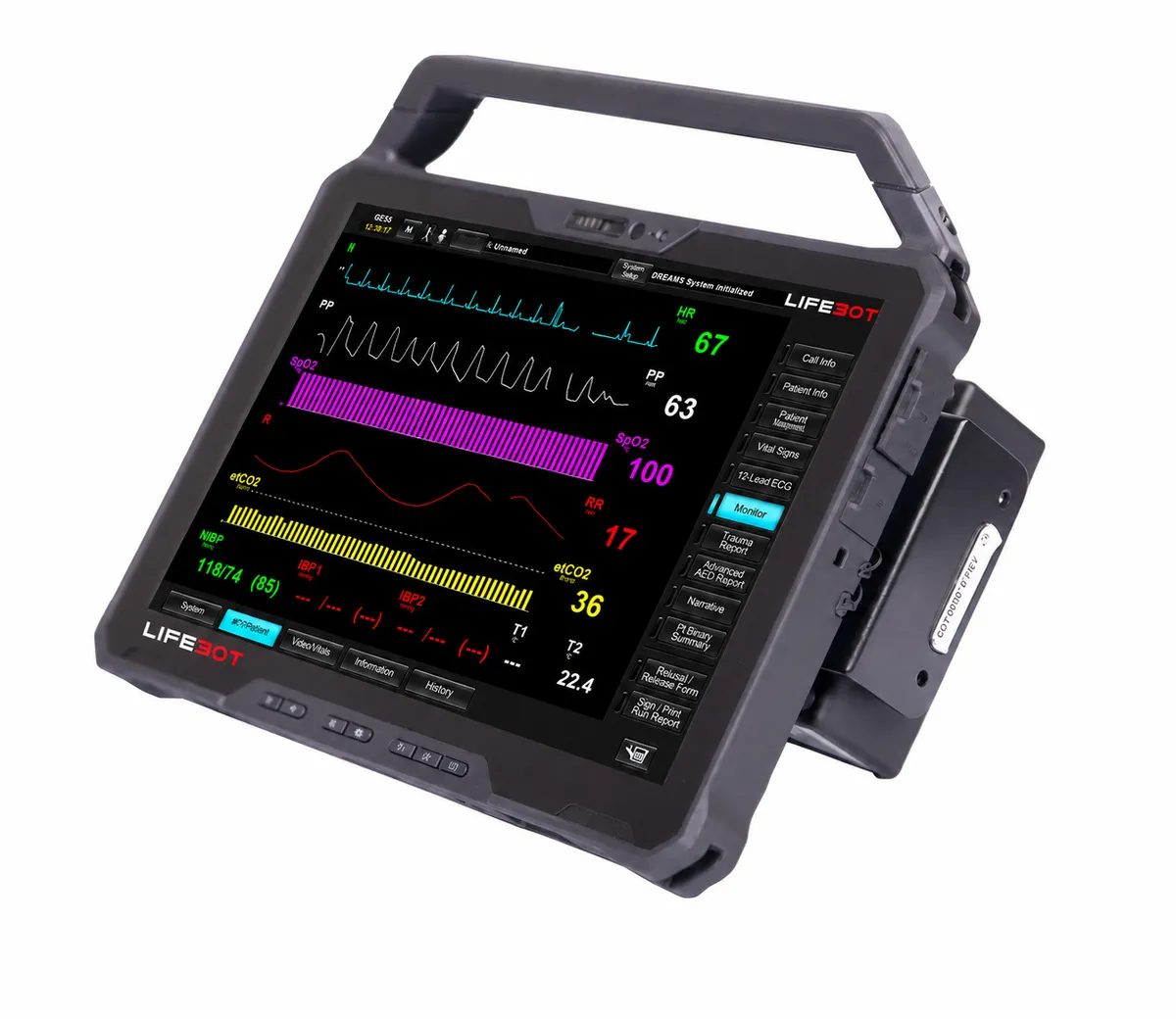
LifeBot Link rugged tablet with clinical monitoring display
Product-family illustration. Pictured equipment and arrangement are configuration examples.

The operational problem

Integration is a design problem, not an accessory

Medical communications equipment must fit around the patient workspace: stowage, mounting, wiring, power, thermal arrangements and camera placement all interact.

The vehicle network becomes one of the selected communications paths, and the medical package must remain practical for the crew in motion.

How the network fits

Each participant gets a defined role.

The configuration assigns a workspace to each role. Equipment, communications and interfaces follow the selected design.

Planning the service

Questions we answer together before any proposal.

A configuration that fits the mission covers the clinical task and everything that keeps it running.

Operating conditionPlanning response
Physical installationStowage, mounting, cable routing and access to accessories.
ElectricalInput power, power budget, charging and thermal limits.
CommunicationsRouter, modem, antenna and service-path selection.
Crew workflowCamera placement and the working position in motion.

In your demo

What we will show you.

  • Link with mounting and power accessory options
  • ICM path policies for vehicle, cellular and satellite services
  • An encounter from vehicle to remote clinician

LifeBot systems are not yet registered for clinical use in Türkiye. Until registration is complete, they are presented for demonstration and evaluation with sample data.

Who should join

  • Programme or product manager
  • Vehicle integration engineering
  • Medical capability lead
Request a demo

Relevant evidence

What the record shows, and its limits.

All evidence

Original DREAMS programme

Military ambulance testbed (M997A2)

Integration of medical communications equipment into an existing military ambulance.

What it shows
How stowage, mounting, wiring, power, thermal arrangements and camera placement were addressed without compromising the vehicle’s care and transport role.
What it does not show
Counts, dimensions and communications arrangements belong to the original programme, not to a current product.

Source: Digital EMS final report, 2006 (pp. 29–35).

Introduced 2017 · published 2018

University of Alberta mobile stroke unit

A mobile stroke unit combining a CT scanner, point-of-care laboratory and LifeBot telestroke equipment, connecting a specialist team and a remote neurologist with patients transferred from rural locations.

What it shows
LifeBot equipment working inside a complete mobile clinical service, with remote specialist participation during transport.
What it does not show
The complete service was evaluated; outcomes do not isolate the equipment’s effect.

Source: Shuaib et al., BMJ Innovations 4, 54–59 (2018). DOI 10.1136/bmjinnov-2017-000240.

Request a demo

See the complete encounter, live.

Book a demonstration with sample data: patient-side work, the remote clinician joining, local work during an outage and the record arriving. Online, on site in Türkiye or at ICMM 2026.

Request a demo