
Hospitals & remote consultation

Specialist reach for every treatment location.

Hospital networks, satellite clinics and continuing-care facilities need specialist input where the specialist is not. Core brings the encounter to the bedside, Command brings in the remote clinician, and Matrix and project-defined hospital interfaces handle the record.

  • Hospital groups and city hospitals
  • Satellite and rural clinics
  • Continuing and elderly care
  • Emergency and intensive care departments
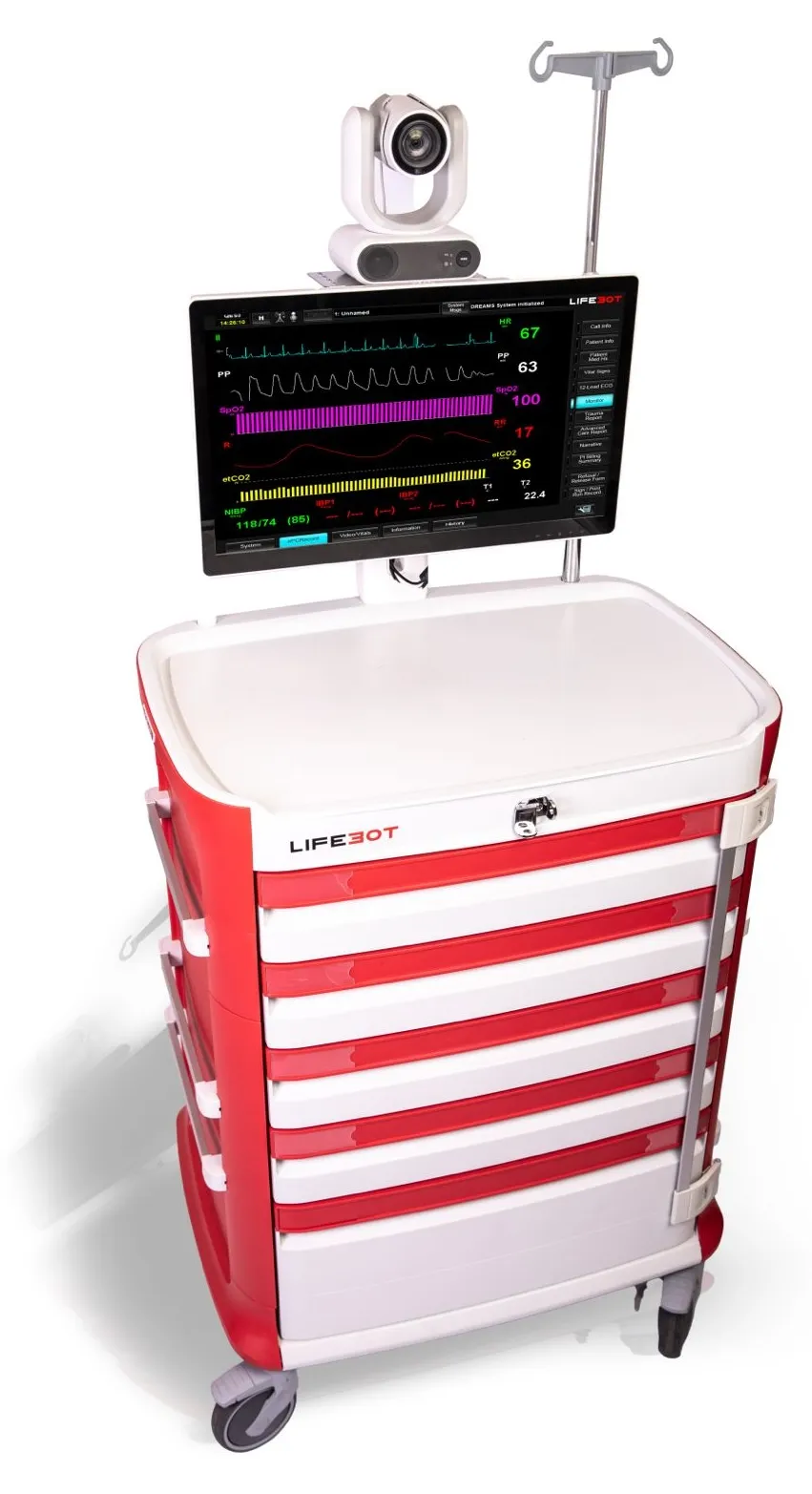
LifeBot Core mobile clinical cart with touchscreen and camera
Product-family illustration. Pictured equipment and arrangement are configuration examples.

The operational problem

The expertise is in one building; the patient is in another

A remote consultation is only useful when it fits an established care pathway, with the staffing, equipment and workflow to support it.

Integration starts with the information the team needs and the systems that provide it: what is shared live, what becomes part of a record package and who uses each type of information.

How the network fits

Each participant gets a defined role.

The configuration assigns a workspace to each role. Equipment, communications and interfaces follow the selected design.

Planning the service

Questions we answer together before any proposal.

A configuration that fits the mission covers the clinical task and everything that keeps it running.

Operating conditionPlanning response
Treatment areaCart mobility, working area, camera coverage, power and cleaning.
Consultation coverageWho consults, from where, and with which information.
Hospital interfaceReceiving system, identifiers, field mapping and exception handling.
Records ownershipStorage, retention, backup and access responsibilities.

In your demo

What we will show you.

  • A Core encounter with monitoring and examination media
  • A specialist consultation from Command
  • Record package review in Matrix
  • Discussion of your hospital interface requirements

LifeBot systems are not yet registered for clinical use in Türkiye. Until registration is complete, they are presented for demonstration and evaluation with sample data.

Who should join

  • Clinical lead
  • Hospital IT / integration
  • Nursing or unit management
Request a demo

Relevant evidence

What the record shows, and its limits.

All evidence

2014–2016

Maryland continuing-care telehealth

Lorien Health Systems, University of Maryland Upper Chesapeake Health and the Maryland Emergency Medicine Network selected LifeBot DREAMS as the telehealth platform.

What it shows
Nurses at the patient side with emergency-department clinicians participating remotely: vital signs and ECG combined with multiple camera views, nursing documentation and remote camera operation.
What it does not show
Historical service reporting and utilisation measures, not a randomised product comparison.

Source: Maryland Health Care Commission, Telehealth Project Grants reports, 2016.

Introduced 2017 · published 2018

University of Alberta mobile stroke unit

A mobile stroke unit combining a CT scanner, point-of-care laboratory and LifeBot telestroke equipment, connecting a specialist team and a remote neurologist with patients transferred from rural locations.

What it shows
LifeBot equipment working inside a complete mobile clinical service, with remote specialist participation during transport.
What it does not show
The complete service was evaluated; outcomes do not isolate the equipment’s effect.

Source: Shuaib et al., BMJ Innovations 4, 54–59 (2018). DOI 10.1136/bmjinnov-2017-000240.

Request a demo

See the complete encounter, live.

Book a demonstration with sample data: patient-side work, the remote clinician joining, local work during an outage and the record arriving. Online, on site in Türkiye or at ICMM 2026.

Request a demo